Endoscopy vs. Colonoscopy: Differences, Uses and Preparation
20 October 2026
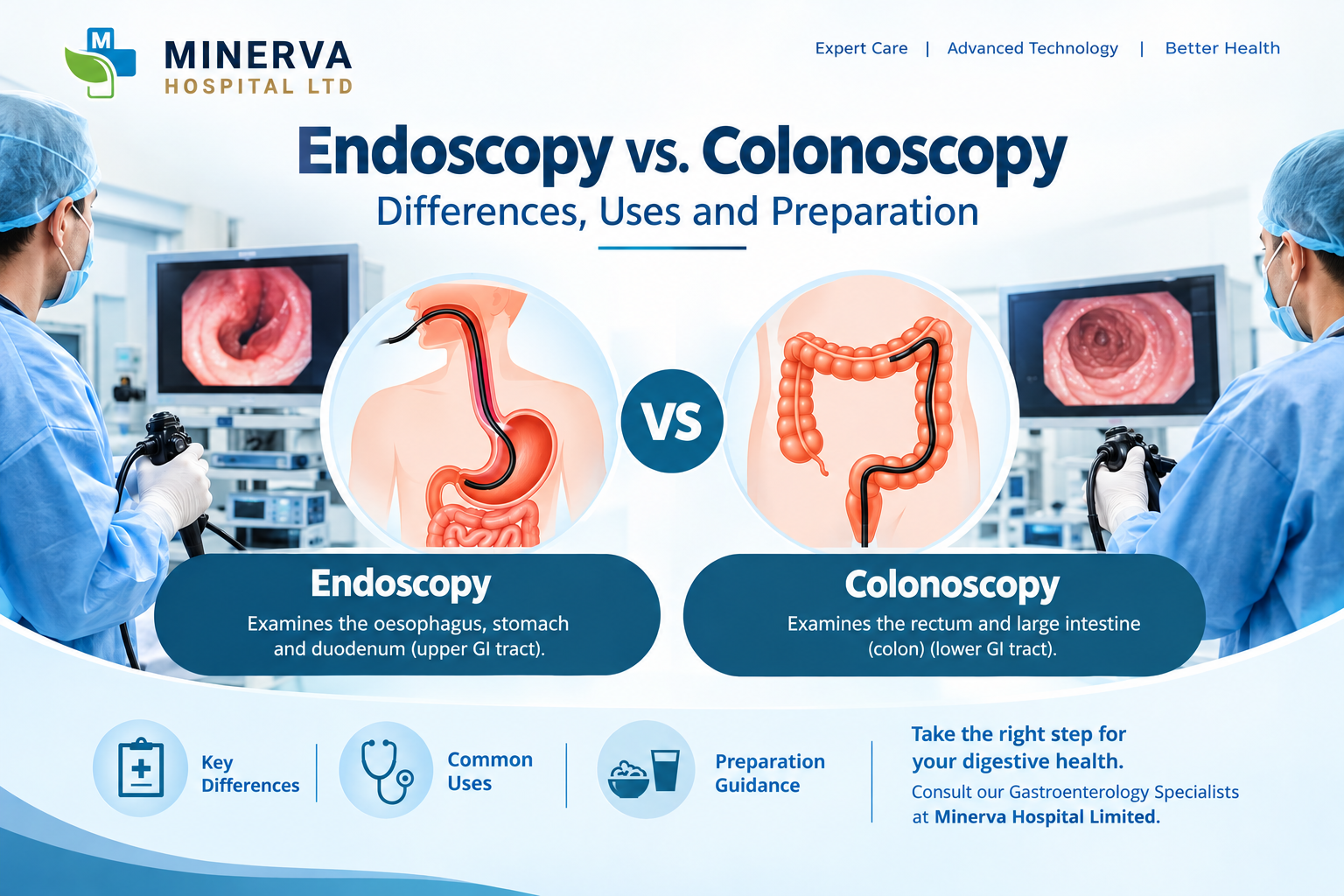
Digestive problems such as persistent stomach pain, heartburn, changes in bowel habits, or rectal bleeding may require further investigation. Two commonly used diagnostic procedures are endoscopy and colonoscopy. Although both use a flexible tube with a camera to examine the digestive tract, they focus on different areas and serve different purposes.
This guide explains the difference between endoscopy and colonoscopy, their uses, preparation requirements, possible risks, and when to consult a gastroenterologist at Minerva Hospital Limited in Dhaka.
Quick Answer: What Is the Difference Between Endoscopy and Colonoscopy?
An upper gastrointestinal (GI) endoscopy examines the oesophagus, stomach, and the first part of the small intestine. A colonoscopy examines the rectum and large intestine (colon). Doctors recommend one or both procedures depending on a patient's symptoms, medical history, and clinical needs.
| Feature | Upper GI Endoscopy | Colonoscopy |
|---|---|---|
| Area examined | Oesophagus, stomach and duodenum | Rectum and large intestine |
| How the scope enters | Usually through the mouth | Through the anus |
| Common reasons | Persistent heartburn, swallowing problems, suspected ulcers or upper GI bleeding | Rectal bleeding, persistent bowel changes, suspected intestinal disease or colorectal screening |
| Preparation | Fasting as instructed | Bowel cleansing and dietary instructions |
| Biopsy | May be taken when indicated | May be taken when indicated |
Important: The word "endoscopy" can refer broadly to procedures that examine the inside of the body. In this article, it primarily means upper GI endoscopy, commonly called gastroscopy.
What Is an Endoscopy?
An upper GI endoscopy is a diagnostic procedure in which a doctor passes a thin, flexible tube with a light and camera through the mouth to examine the oesophagus, stomach, and duodenum. It helps doctors investigate symptoms affecting the upper digestive tract.
Why Is an Endoscopy Performed?
A doctor may recommend an upper GI endoscopy to investigate:
- Persistent heartburn or acid reflux
- Ongoing upper abdominal pain or discomfort
- Difficulty or pain when swallowing
- Persistent nausea or vomiting
- Suspected gastritis or peptic ulcers
- Unexplained upper gastrointestinal bleeding
- Abnormal findings that require closer examination
During the procedure, a specialist may collect a small tissue sample (biopsy) or perform certain treatments when medically necessary.
Learn more about digestive health and specialist services at Minerva Hospital's Gastroenterology Department .
What Is a Colonoscopy?
A colonoscopy is a procedure used to examine the rectum and the lining of the large intestine. A doctor carefully inserts a colonoscope, a flexible tube with a camera, through the anus to inspect the colon.
Colonoscopy can help identify inflammation, ulcers, abnormal growths, polyps, and possible sources of intestinal bleeding. It can also be used for colorectal cancer screening in appropriate patients.
Why Is a Colonoscopy Recommended?
- Rectal bleeding or blood in the stool
- Persistent changes in bowel habits
- Chronic diarrhoea or unexplained constipation requiring investigation
- Unexplained iron-deficiency anaemia in selected patients
- Suspected inflammatory bowel disease
- Follow-up of previously identified colon polyps
- Colorectal cancer screening based on age and risk factors
If a polyp is found, the doctor may be able to remove it during the procedure. Tissue samples may also be collected for laboratory examination.
For details about available diagnostic investigations, visit Minerva Hospital's Diagnostic Tests page .
Endoscopy vs. Colonoscopy: Key Differences Explained
1. The Area of the Digestive Tract
Upper GI endoscopy examines the upper digestive tract, including the oesophagus and stomach. Colonoscopy examines the lower digestive tract, particularly the rectum and colon. Neither procedure routinely examines the entire digestive system.
2. The Symptoms Investigated
Endoscopy is commonly used to investigate upper digestive symptoms, such as persistent heartburn, swallowing difficulties, and suspected stomach ulcers. Colonoscopy is used to investigate lower digestive symptoms, including rectal bleeding and persistent changes in bowel habits. Some symptoms overlap, so a medical assessment is essential.
3. Preparation Before the Test
Upper GI endoscopy usually requires fasting before the procedure. Colonoscopy requires bowel preparation to clear stool from the large intestine so that the doctor can examine its lining properly.
4. Comfort and Sedation
Depending on the procedure and the patient's condition, throat-numbing medicine or sedation may be offered for upper GI endoscopy. Colonoscopy may also involve sedation or other measures to improve comfort. The available options depend on the clinical assessment and hospital protocol.
5. Recovery After the Procedure
Recovery varies according to the procedure, any sedation used, and whether a biopsy or treatment was performed. Temporary bloating, gas, or mild throat discomfort may occur. Patients who receive sedation should follow discharge instructions and arrange an escort if required.
How to Prepare for an Endoscopy
Proper preparation helps the doctor examine the upper digestive tract safely and clearly. Follow the specific instructions provided by your hospital.
- Fast as instructed: You will usually need to stop eating for a specified period before the procedure. Your care team will tell you when to stop drinking as well.
- Discuss your medications: Tell your doctor about prescription medicines, over-the-counter products, vitamins, and supplements.
- Report medical conditions: Inform the medical team about diabetes, allergies, pregnancy, heart or lung conditions, and previous reactions to sedation.
- Arrange transport if needed: If sedation is planned, arrange for someone to take you home.
Do not change or stop prescribed medicines without advice from your healthcare professional.
How to Prepare for a Colonoscopy
Colonoscopy preparation is especially important because stool remaining in the colon can obscure the intestinal lining and affect the quality of the examination.
- Follow the recommended diet: Your doctor may ask you to follow a low-fibre diet for a specified period before the test.
- Take the prescribed bowel preparation: Use the recommended bowel-cleansing medicine exactly as instructed.
- Follow fluid instructions: Drink the permitted fluids as directed to help prevent dehydration. Stop drinking at the time specified by your care team.
- Review your medications: Discuss blood thinners, diabetes medicines, iron supplements, and all other medicines with your doctor.
- Stay near a toilet: Bowel-cleansing medicine causes frequent bowel movements. Plan to remain somewhere comfortable during preparation.
- Arrange transport if sedated: Follow the hospital's requirements for an escort and post-procedure care.
Do not use a bowel-cleansing medicine without appropriate medical instructions. The exact preparation and fasting schedule depend on the planned procedure and your health.
Is Endoscopy or Colonoscopy Painful?
Both procedures can cause some discomfort, but the experience differs from person to person. Upper GI endoscopy may cause gagging or a temporary sore throat. Colonoscopy may cause pressure, gas, or abdominal cramping as the scope moves through the colon.
Sedation and other comfort measures may be available depending on the procedure and the patient's needs. Discuss any concerns about pain, anxiety, or sedation with your doctor before the test.
Are Endoscopy and Colonoscopy Safe?
These are commonly performed medical procedures and are generally considered safe when appropriately indicated and performed by trained professionals. However, no procedure is completely risk-free.
Possible complications include:
- Bleeding, particularly after a biopsy or polyp removal
- Rare injury or perforation of the digestive tract
- Reactions to sedative medicines
- Temporary discomfort, bloating, or nausea
Seek urgent medical attention if you experience severe or worsening abdominal pain, heavy bleeding, fever, breathing difficulties, or other serious symptoms after a procedure. Your doctor can explain the risks that apply to your particular situation.
Can You Have an Endoscopy and Colonoscopy on the Same Day?
Yes. In selected patients, doctors may recommend upper GI endoscopy and colonoscopy during the same appointment. This can be useful when symptoms, anaemia, or clinical findings require investigation of both the upper and lower digestive tract.
Whether both procedures are appropriate depends on your symptoms, medical history, preparation, and the specialist's assessment. Not every patient needs both tests.
When Should You Consult a Gastroenterologist?
Consider medical evaluation if you have persistent digestive symptoms, recurrent abdominal pain, ongoing heartburn, difficulty swallowing, unexplained weight loss, blood in your stool, or a lasting change in bowel habits. Your doctor can assess the symptoms and decide whether endoscopy, colonoscopy, laboratory testing, or another investigation is appropriate.
Learn more about the difference between a gastroenterologist and a liver specialist to understand which specialist may be suitable for your concerns.
Endoscopy and Colonoscopy at Minerva Hospital Limited, Dhaka
Minerva Hospital Limited provides gastrointestinal diagnostic services, including upper GI endoscopy and colonoscopy. Patients can consult the hospital's gastroenterology team to discuss symptoms, appropriate investigations, preparation, and follow-up care.
Before booking a test, consult a qualified doctor to determine which procedure is appropriate for your symptoms and medical history.
Explore Gastroenterology Services | View Diagnostic Tests | Visit Minerva Hospital
Need guidance about a digestive health concern? Call Minerva Hospital Limited at 09617-999222 to enquire about appointments and available services.
Frequently Asked Questions (FAQs)
1. What is the main difference between endoscopy and colonoscopy?
Upper GI endoscopy examines the oesophagus, stomach, and duodenum, while colonoscopy examines the rectum and large intestine. The doctor chooses the appropriate test based on symptoms and clinical findings.
2. Which is better, endoscopy or colonoscopy?
Neither procedure is universally better. They examine different parts of the digestive tract. The right test depends on the symptoms or condition being investigated.
3. Do I need to fast before an endoscopy?
Yes, fasting is generally required before upper GI endoscopy. The hospital will tell you when to stop eating and drinking based on the procedure and sedation plan.
4. How do I clean my bowel before a colonoscopy?
Follow the prescribed bowel-cleansing medicine, diet, and fluid instructions. Proper bowel preparation helps the doctor see the colon lining clearly.
5. Can endoscopy detect stomach ulcers?
Yes. Upper GI endoscopy can identify stomach and duodenal ulcers. A doctor may also take tissue samples or arrange additional tests when necessary.
6. Can colonoscopy detect colorectal cancer?
Colonoscopy can identify suspicious abnormalities and polyps. Biopsy and laboratory examination may be needed to confirm a diagnosis. It is also used for colorectal cancer screening in appropriate patients.
7. How long does an endoscopy or colonoscopy take?
The procedure itself often takes approximately 15–60 minutes, depending on the test and any additional treatment required. Preparation, recovery, and observation may make the total hospital visit longer.
8. Where can I get an endoscopy or colonoscopy in Dhaka?
You can enquire about upper GI endoscopy and colonoscopy at Minerva Hospital Limited through its Gastroenterology Department or call 09617-999222 to confirm availability and booking details.
9. Can both procedures be done together?
Yes, both may be performed during the same appointment when clinically appropriate. Your doctor will determine whether combined testing is suitable for you.
Trusted External Medical Resources
- NIDDK: Upper GI Endoscopy — procedure, uses, preparation, and risks.
- NIDDK: Colonoscopy — reasons for testing, bowel preparation, and procedure information.
- NHS: Getting Ready for a Colonoscopy — preparation and instructions before the test.