liver care
Colonoscopy in Dhaka: Preparation, Procedure and Recovery
27 October 2026
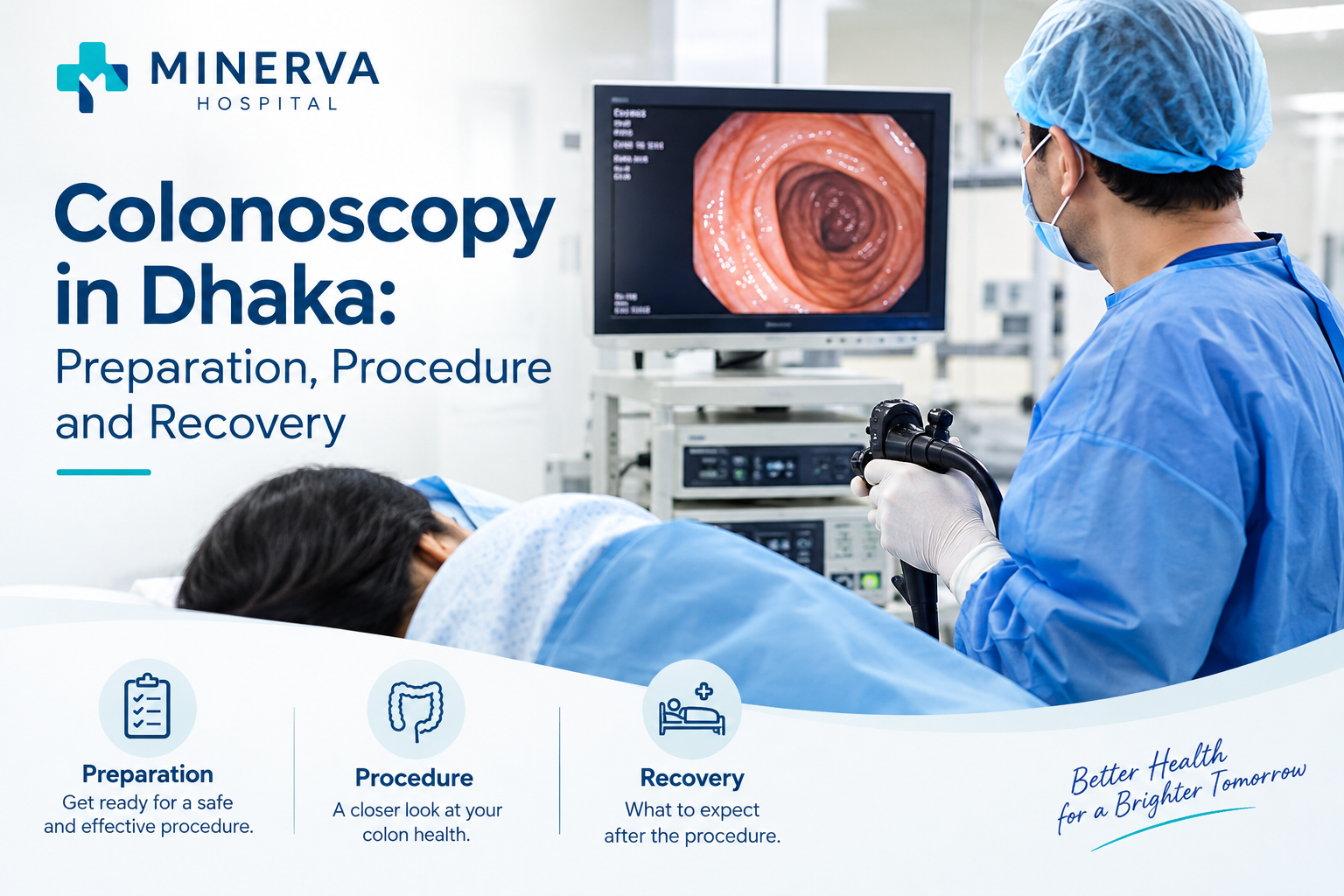
Colonoscopy in Dhaka: Preparation, Procedure and Recovery
A clear, step-by-step patient guide from Minerva Hospital on what to expect before, during and after a colonoscopy.
Quick answer: A colonoscopy is a procedure in which a doctor uses a thin, flexible camera (colonoscope) to examine the inside of your large intestine (colon and rectum). It is used to detect and remove polyps, find the cause of symptoms such as bleeding or long-term diarrhoea, and screen for colorectal cancer. Preparation involves a special diet and bowel-cleansing medicine, the examination takes roughly 20 to 45 minutes under sedation, and most people go home the same day and resume normal activity within 24 hours.
What is a colonoscopy?
A colonoscopy is an endoscopic examination of the entire large bowel (for a neutral overview, see the NIDDK guide to colonoscopy). The doctor passes a long, flexible tube with a light and a high-definition camera through the anus and gently advances it through the rectum and colon. The images appear on a monitor in real time, allowing the specialist to see inflammation, ulcers, bleeding points, polyps and tumours.
It is both a diagnostic and a therapeutic test. If a polyp is found, it can usually be removed during the same session, and a small tissue sample (biopsy) can be taken for laboratory analysis.
Who needs a colonoscopy?
Screening for colorectal cancer
Many international guidelines recommend that adults at average risk begin colorectal cancer screening at around age 45. Because most colorectal cancers develop slowly from polyps, finding and removing polyps early can prevent cancer from forming.
Symptoms that may need a colonoscopy
- Blood in the stool or bleeding from the rectum
- A persistent change in bowel habits (constipation or diarrhoea lasting several weeks)
- Ongoing abdominal pain, bloating or cramping
- Unexplained weight loss
- Iron-deficiency anaemia with no clear cause
- Narrow stools or a constant feeling that the bowel is not empty
Higher-risk groups
- A parent, sibling or child with colorectal cancer or advanced polyps
- A personal history of polyps or colorectal cancer
- Inflammatory bowel disease (ulcerative colitis or Crohn's disease)
- Known inherited conditions such as Lynch syndrome or familial adenomatous polyposis
If you fall into one of these groups, your gastroenterologist may recommend starting earlier and repeating the test more often. You can learn more about our specialists on the Gastroenterology department page.
How to prepare for a colonoscopy
The quality of the examination depends heavily on how clean the bowel is. A poorly prepared bowel can hide polyps and may mean the test has to be repeated. Always follow the written instructions you receive from your doctor; the outline below is a general guide. For another trusted reference, see the NHS colonoscopy overview. Your doctor may also ask for blood tests or other pre-procedure investigations; you can view available investigations on our diagnostic tests page.
Step-by-step preparation timeline
| When | What to do |
|---|---|
| 1 week before | Tell your doctor about all medicines and supplements, especially blood thinners, aspirin, iron tablets, and diabetes medicines. Do not stop any medicine unless your doctor tells you to. Arrange a companion and transport for the day. |
| 2 to 3 days before | Switch to a low-fibre diet as advised: avoid nuts, seeds, raw vegetables, whole grains and skins of fruit. White rice, eggs, boiled chicken or fish, and plain bread are usually fine. |
| 1 day before | Follow a clear-liquid diet: water, clear soup or broth, clear fruit juice without pulp, plain tea or coffee without milk, and electrolyte drinks. Avoid red or purple coloured liquids. Start the bowel-cleansing solution as prescribed. |
| Morning of the test | Take the second dose of the cleansing solution at the time advised. Stop all fluids a few hours before the procedure, as instructed. Take essential medicines with a small sip of water only if your doctor allows. |
Important: Tell your doctor in advance if you have diabetes, kidney disease, heart disease, are pregnant, are allergic to any medicine, or take blood thinners. Your preparation plan may need to be adjusted.
Tips to make bowel preparation easier
- Chill the cleansing solution and drink it through a straw.
- Suck on a clear sweet or lemon wedge between glasses to reduce the taste.
- Stay close to a toilet and use a soft wipe or barrier cream to protect your skin.
- Keep drinking clear fluids to avoid dehydration.
- You are ready when your stool is a clear or pale yellow liquid with no solid pieces.
What happens during the procedure
- Check-in and consent: The team confirms your identity, reviews your history and explains the procedure. You sign a consent form.
- Sedation: A small cannula is placed in your arm. Sedation is given so you stay comfortable and relaxed. Your heart rate, blood pressure and oxygen levels are monitored throughout.
- Positioning: You lie on your left side with your knees drawn up.
- Examination: The colonoscope is gently introduced and advanced to the beginning of the colon. Air or carbon dioxide is used to open the bowel so that the lining can be seen clearly. The doctor carefully inspects the lining as the scope is slowly withdrawn.
- Polyp removal or biopsy: If needed, small instruments passed through the scope remove polyps or take tissue samples. This is not usually felt.
- Recovery room: After the scope is removed, you rest while the sedation wears off.
The examination usually takes about 20 to 45 minutes. Plan for roughly 2 to 4 hours at the hospital in total.
Recovery and aftercare
Immediately after the procedure
You may feel sleepy for a few hours. It is common to have mild bloating, gas or cramping because of the air introduced during the test; passing gas helps relieve it. You must have an adult accompany you home.
The rest of the day
- Do not drive, operate machinery, sign legal papers or make major decisions.
- Start with light, easy-to-digest food and plenty of fluids, then return to your normal diet as comfortable.
- Rest at home and avoid heavy exercise or heavy lifting.
- Take medicines as advised by your doctor. Ask before restarting blood thinners.
If a polyp was removed
Your doctor may ask you to avoid certain painkillers, blood thinners and strenuous activity or long travel for a period of time. A small amount of blood in the stool can occur, but heavy or continuing bleeding needs urgent attention. Biopsy and polyp results are usually available within several days, and your doctor will advise when to repeat the test.
Risks and when to call a doctor
Colonoscopy is considered a safe procedure when performed by trained specialists, but like all medical procedures it carries small risks, including bleeding (mainly after polyp removal), a tear in the bowel wall (perforation, which is rare), and reactions to sedation or the bowel-cleansing solution.
Seek medical help immediately if you have:
- Severe or worsening abdominal pain or a hard, swollen abdomen
- Fever or chills
- Heavy rectal bleeding or passing large clots
- Persistent vomiting
- Dizziness, fainting or a rapid heartbeat
Colonoscopy at Minerva Hospital, Dhaka
At Minerva Hospital, colonoscopy is offered as part of our Gastro & Liver Care services and is performed by experienced specialists with a focus on patient safety, comfort and clear communication. Patients receive:
- A pre-procedure consultation to review symptoms, risks and medicines
- Written, easy-to-follow bowel preparation instructions
- Monitored sedation for a comfortable experience
- Same-session polyp removal and biopsy where clinically appropriate
- A post-procedure explanation of findings and a clear follow-up plan
Note for the publishing team: replace the points above with your hospital's actual equipment, specialist names and credentials before publishing.
Cost of colonoscopy in Dhaka
The cost of a colonoscopy in Dhaka depends on factors such as whether the test is diagnostic or includes polyp removal, the type of sedation used, biopsy and laboratory charges, and the facility you choose. For an accurate estimate, contact Minerva Hospital's appointment desk, who can explain the package before you book.
Frequently asked questions
Is colonoscopy painful?
Most patients feel little or no pain because the procedure is done under sedation. Some feel mild cramping or bloating afterwards, which usually settles within a few hours.
How long does a colonoscopy take?
The examination itself usually takes about 20 to 45 minutes. Allow around 2 to 4 hours in total for check-in, sedation and recovery.
How should I prepare for a colonoscopy?
Follow a low-fibre or clear-liquid diet as advised, take the bowel-cleansing solution exactly as prescribed, and tell your doctor about all medicines, especially blood thinners and diabetes medicines.
When can I eat after a colonoscopy?
Most people can start with light food once the sedation wears off and return to a normal diet the same day or the next day, unless the doctor advises otherwise.
At what age should I have a colonoscopy?
Many international guidelines recommend starting colorectal cancer screening at age 45 for average-risk adults. You may need it earlier if you have symptoms or a family history of colorectal cancer or polyps.
Can I drive after a colonoscopy?
No. After sedation you should not drive, operate machinery or make important decisions for the rest of the day. Arrange for a relative or friend to take you home.
Book your colonoscopy consultation in Dhaka
Speak with a gastroenterology specialist at Minerva Hospital to find out whether a colonoscopy is right for you.
Call [09617-999222]Or visit the Gastroenterology department page to learn more.
This article is for general information only and does not replace personal medical advice, diagnosis or treatment. Always follow the instructions of your treating doctor, and seek emergency care if you have severe symptoms.